L’Assiet
Culturally aware meal planning built around households, local food and shared routines.
Plan the week. Reduce the mental load. Keep food human.
Explore the build ↓Independent Builds
These projects begin with ordinary friction I can’t quite ignore.
They’re where I explore behaviour, culture, systems, AI and new business models—turning observations from everyday life into products and systems tangible enough to test.
Projects & systems
From meal planning and wardrobe decisions to circular clothing and knitwear operations, these are working projects shaped by research, real constraints and practical testing.
Culturally aware meal planning built around households, local food and shared routines.
Plan the week. Reduce the mental load. Keep food human.
Explore the build ↓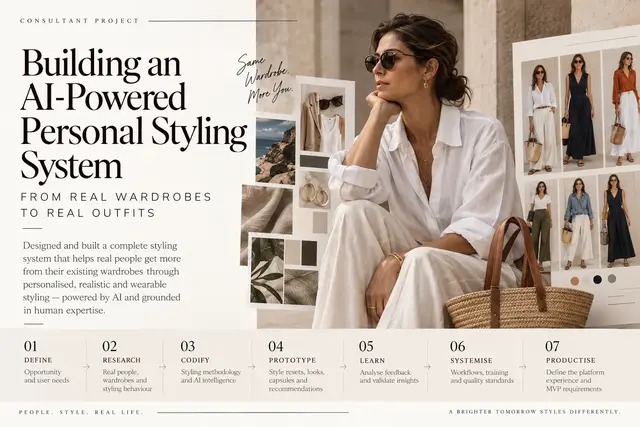
Personal styling, capsule wardrobes, outfit visualisation, wardrobe organisation and culturally relevant recommendations.
Make more of what you already own.
Explore the build ↓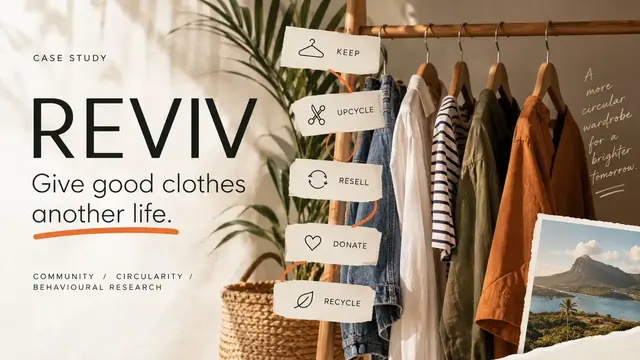
KEEP → UPSTYLING → RESELL → DONATE → REPURPOSE / RECYCLE → DISCARD RESPONSIBLY.
What’s its best next life?
Explore the build ↓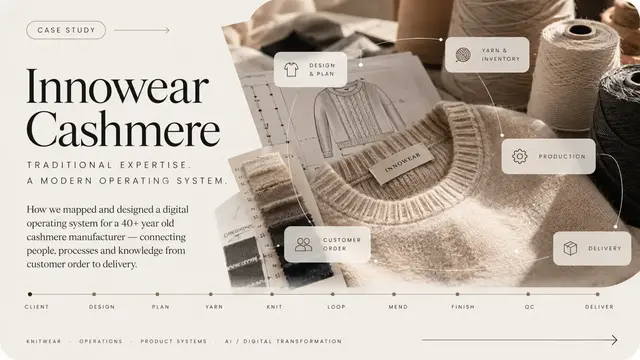
Moving production knowledge out of paper, WhatsApp and people’s heads—so information can travel with the garment.
Less searching. Better decisions.
Explore the build ↓
From market gap to consumer brand: research, proposition, identity, ecommerce and launch.
An end-to-end venture build around cashmere blends.
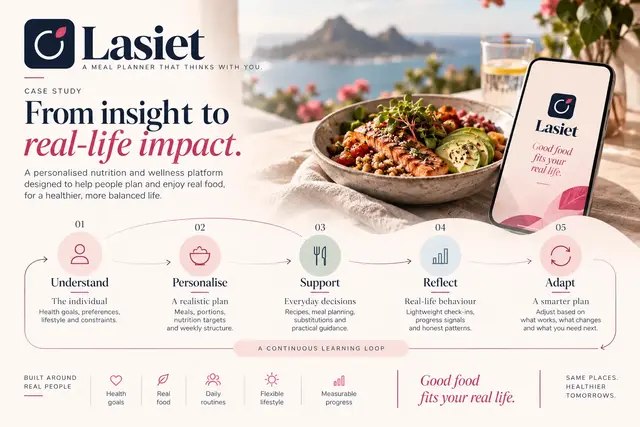
Explore the build ↓Meal planning without turning food into mathematics. L’Assiet is designed to lower the weekly mental load through planning, recipe discovery and shared household routines.
How can meal planning fit around real life, culture and a household’s actual routine?
Many tools make food highly calorie-centric or ask people to maintain another complex system. L’Assiet adapts to the person’s culture, ingredients, household and habits—with practical cooking knowledge and context.
Build a living picture of preferences, household, local ingredients, health context, lifestyle and constraints.
Turn that information into recipes, portions and a realistic weekly plan—without making calorie counting the center of the experience.
Recipes, substitutions, portions, local ingredient ideas and practical cooking knowledge live in one system.
Use lightweight check-ins and progress signals rather than demanding perfect tracking.
Adjust what comes next based on what worked, what didn’t and what changed.
I designed and tested the intelligence an eventual styling platform would need—before treating an interface as the product.
How might we teach AI to style a real person—not an idealised version of them—using the wardrobe they already own?
The wardrobe is the starting asset. Shopping comes later, and only when a specific addition meaningfully unlocks more of what the person already has.
Move beyond outfit generation toward wardrobe potential and style evolution.
Lifestyle, climate, proportions, occasions, comfort, taste and aspiration.
Turn expertise into principles, guardrails, methods and AI instructions.
Style resets, capsules, colour direction, wardrobe edits and recommendations.
Body integrity, garment fidelity, proportion-aware styling, cultural and climate relevance, practicality, age and visual consistency.
Translate learning into prompts, workflows, training and quality standards.
Use validated styling intelligence to shape the experience and requirements.
A circular wardrobe brand and education platform designed to help people keep, rediscover and restyle clothes; use upstyling to transform pieces; then resell, donate, recirculate, recycle or discard responsibly.
What’s its best next life?
Most solutions begin after someone has chosen to sell, donate or discard. REVIV begins one decision earlier and connects the entire choice around a garment’s next life.
Build a trusted environment around high-quality pre-loved clothing and better wardrobe decisions.
Watch how people declutter, price, list, buy, donate, ask questions and make decisions.
Capture friction, trust signals, language, repeated requests and successful or abandoned transactions.
Separate anecdotes from patterns before allowing findings to influence future product thinking.
A connected operating model for a traditional Mauritius-based knitwear company—preserving craftsmanship while connecting information from customer order to delivery.
What happens when organizational knowledge lives in paper, WhatsApp and people’s heads?
I mapped the business as it actually operates, extracted the specialist knowledge inside it and identified where software could remove friction without replacing judgment or craftsmanship.
Private sales, wholesale, sampling, production, inventory and administration.
Order → planning → knitting → looping → mending → finishing → inventory → costing → delivery.
Measurements, grading, yarn consumption, production decisions and costing.
Paper records, repeated calculations, handoffs, stock visibility, pricing and tracking.
Digitise information and repetition; preserve judgment, relationships and quality decisions.
Orders, products, plans, yarn, inventory, production, costing and delivery.
A basic V-neck becomes the pilot from specification through actual margin.
Information · calculations · tracking · history
Craftsmanship · judgment · relationships · exceptions
The connecting pattern
On the surface, very little. Underneath, the pattern is similar.
Earlier venture · The Blends
An end-to-end venture build around cashmere blends and more responsible luxury.
The context
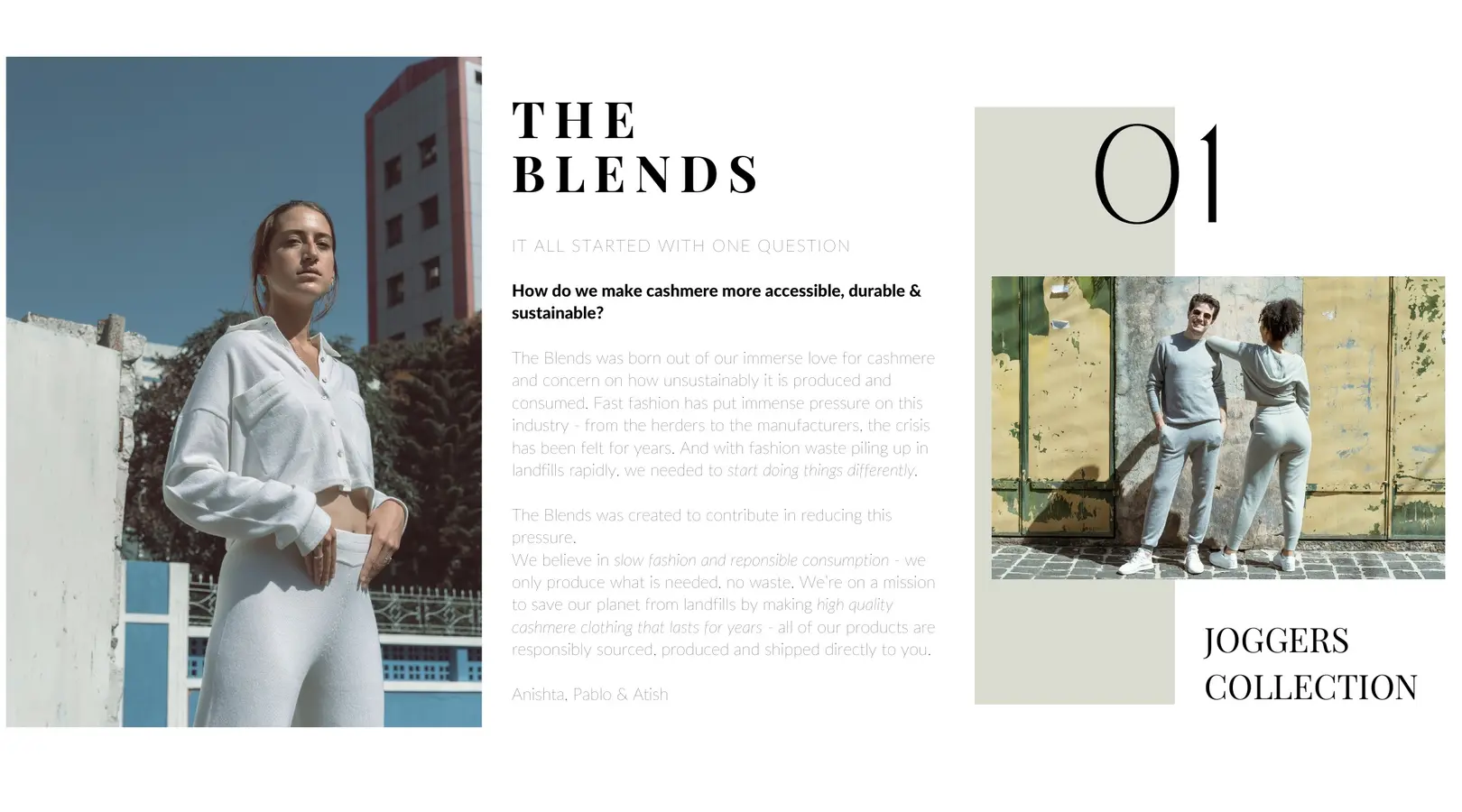
“How do we make cashmere more accessible, durable and sustainable?”
The Blends began with market research into the textile and cashmere industry, sustainability pressures, consumer behaviour, competitors and emerging opportunities. It then moved through audience segmentation, proposition and business model, brand development, ecommerce UX, messaging, photoshoot and model direction, product storytelling and launch.
The proposition combined cashmere blends with made-to-order and made-to-measure thinking: reducing overproduction while making quality knitwear more accessible, useful and personal.
View the original lookbook ↗︎What I led
What the system included
The ecommerce work extended from navigation and product taxonomy to acquisition mechanics, the founder story, sustainability sections, yarn education, the “Blend Meter,” product pages, customer-service content and conversion elements.