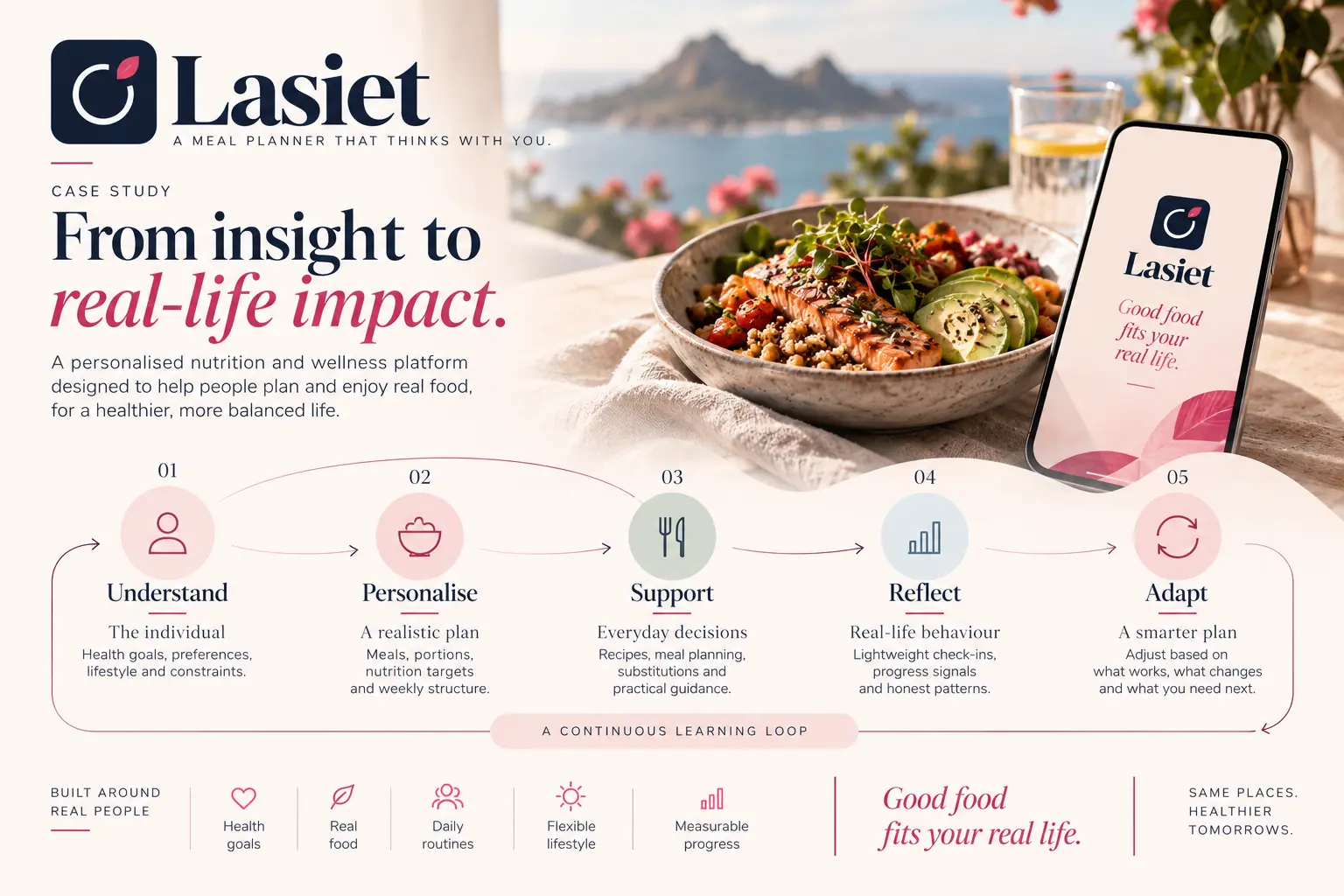
L’Assiet
Culturally aware meal planning built around households, local food and shared routines.
Plan the week. Reduce the mental load. Keep food human.
Explore the system ↓Outside the job description
These projects begin with ordinary friction I can’t quite ignore.
They’re where I explore behaviour, culture, systems, AI and new business models—turning observations from everyday life into products and systems tangible enough to test.
Outside the job description
Problems I have noticed around me, explored deeply and translated into systems that can be tested.
Culturally aware meal planning built around households, local food and shared routines.
Plan the week. Reduce the mental load. Keep food human.
Explore the system ↓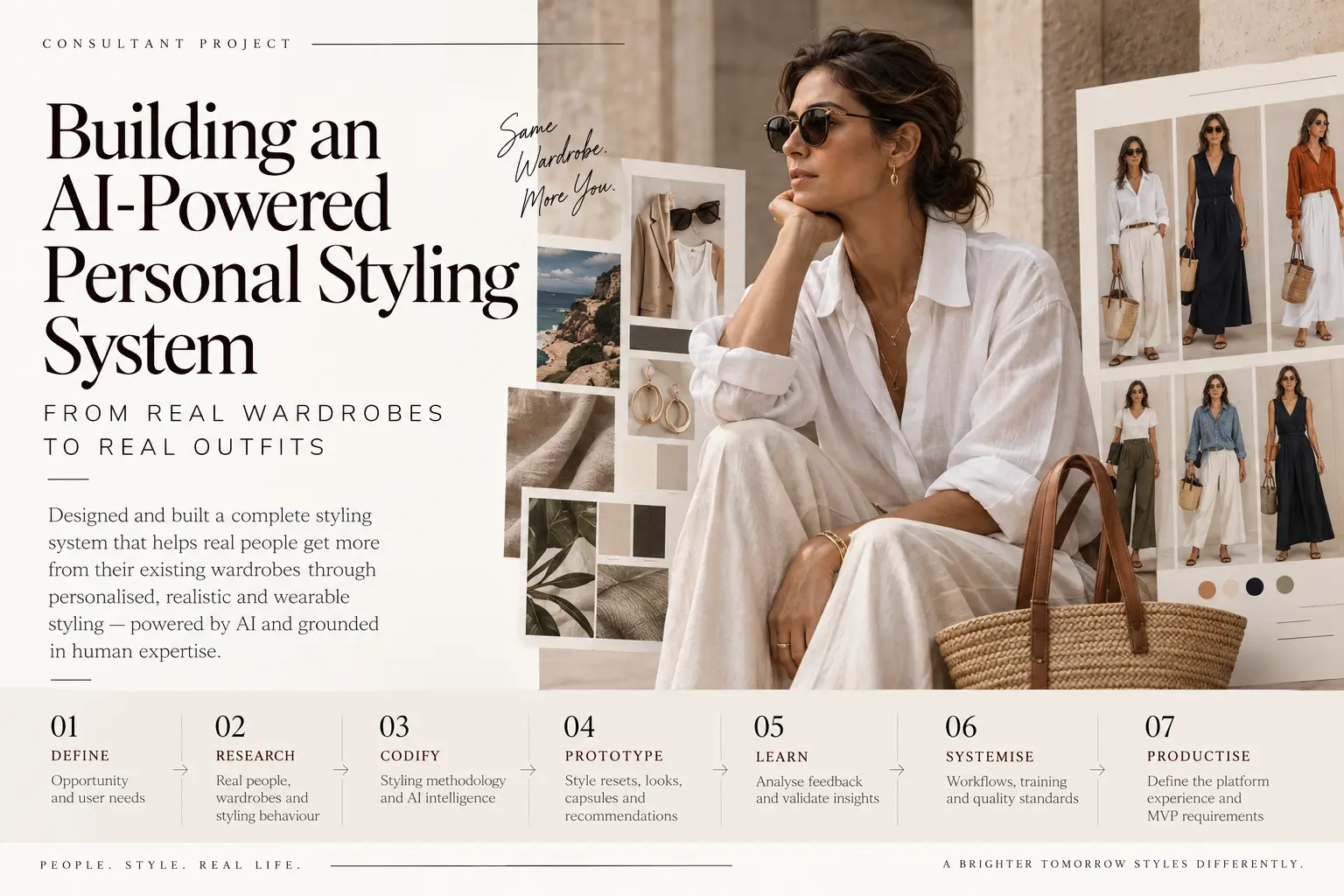
Personal styling, capsule wardrobes, outfit visualisation, wardrobe organisation and culturally relevant recommendations.
Make more of what you already own.
Explore the system ↓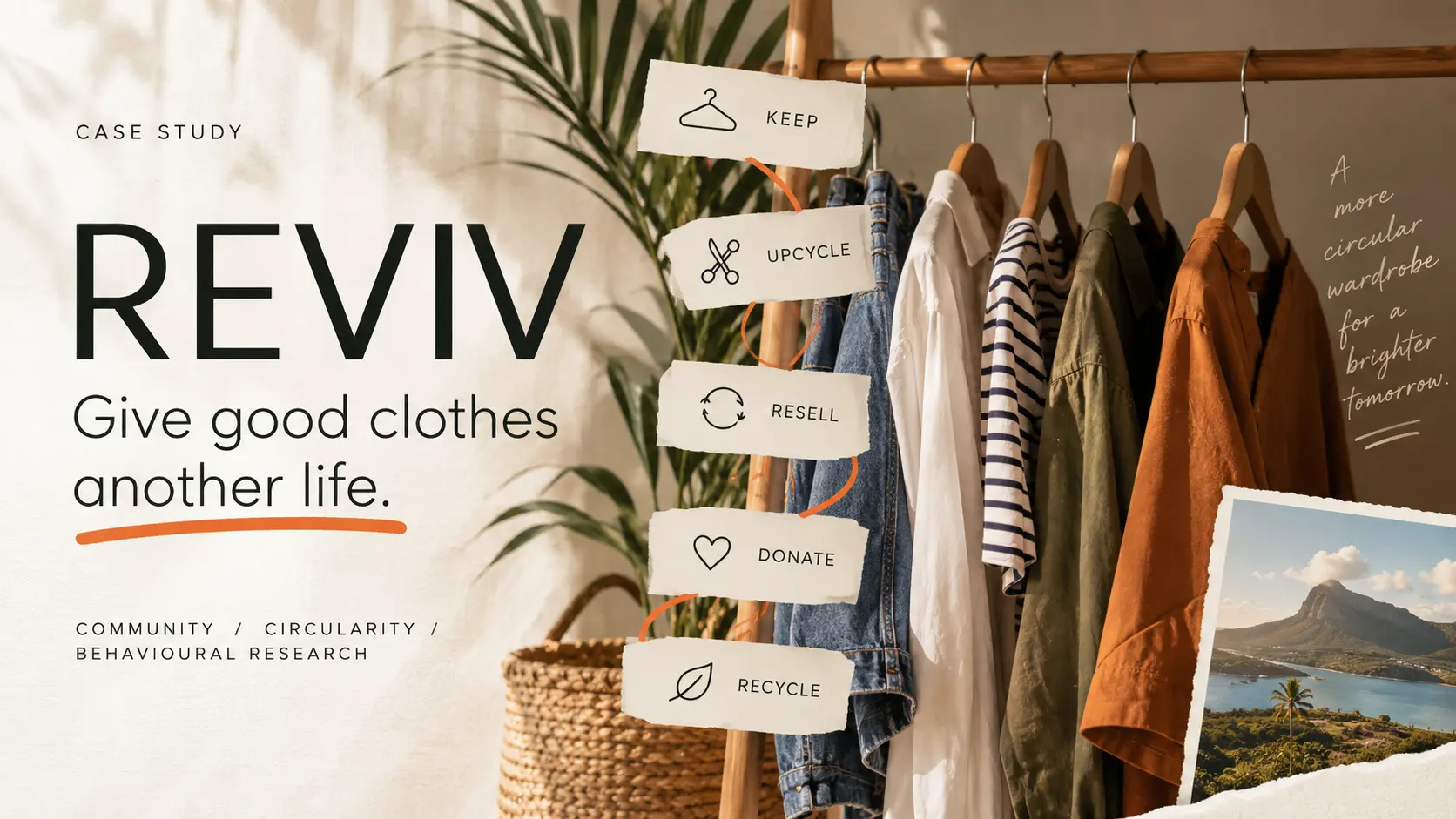
Keep → upcycle → resell → donate → repurpose or recycle → discard responsibly.
What’s its best next life?
Explore the system ↓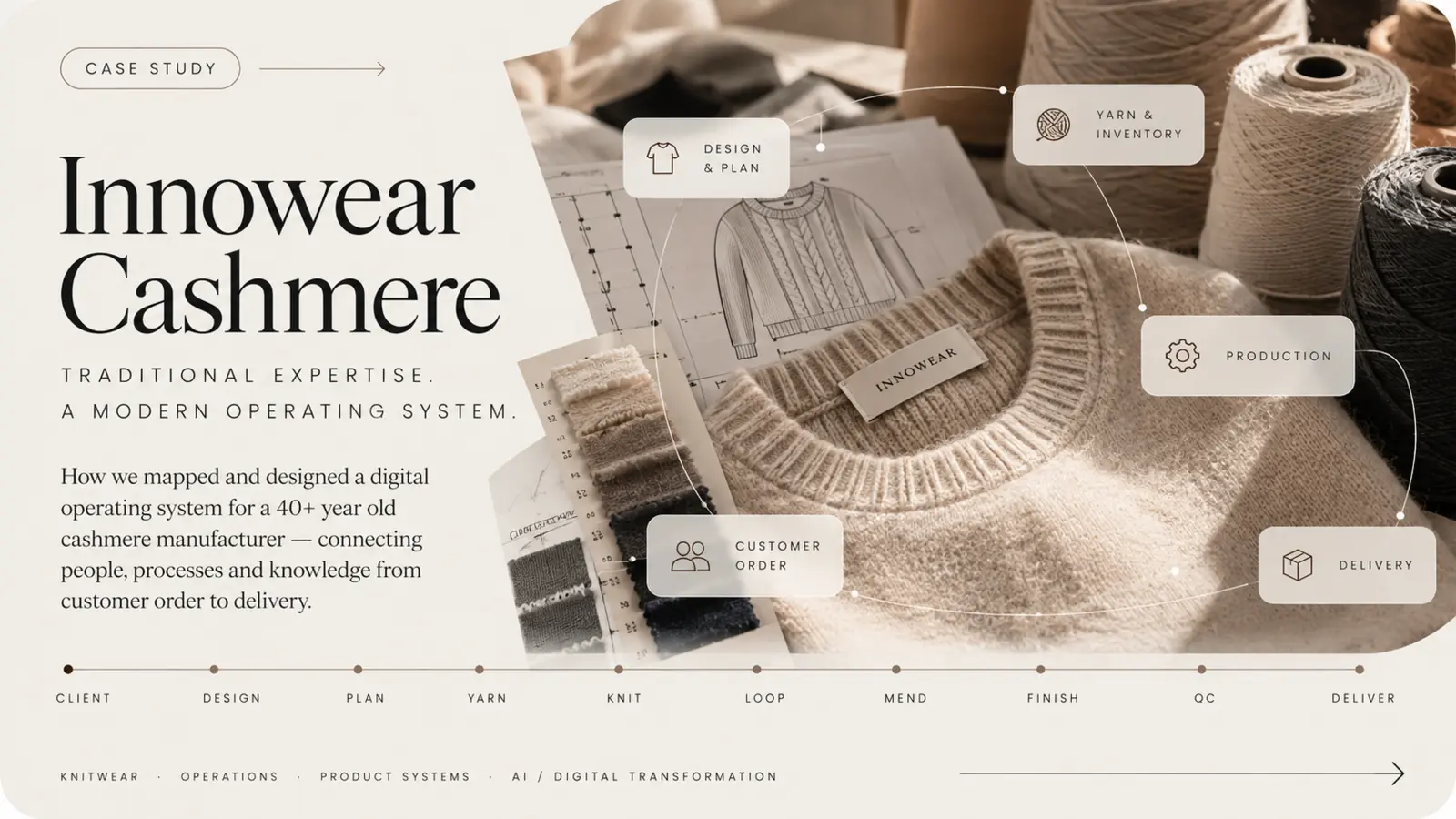
Moving production knowledge out of paper, WhatsApp and people’s heads—so information can travel with the garment.
Less searching. Better decisions.
Explore the system ↓A living meal-planning system designed around the person’s health goals, preferences, routines and changing reality—not around perfect compliance.
How might healthy eating fit around real life—instead of asking real life to fit around a meal plan?
People rarely need more recipes or nutrition information. The harder problem is turning intention into everyday decisions while accounting for health, culture, portions, preferences, available food and a changing schedule.
Build a living picture of goals, health context, preferences, lifestyle and constraints.
Turn that information into meals, portions, nutrition targets and realistic weekly structure.
Recipes, substitutions, portions and practical guidance live in one system.
Use lightweight check-ins and progress signals rather than demanding perfect tracking.
Adjust what comes next based on what worked, what didn’t and what changed.
I designed and tested the intelligence an eventual styling platform would need—before treating an interface as the product.
How might we teach AI to style a real person—not an idealised version of them—using the wardrobe they already own?
The wardrobe is the starting asset. Shopping comes later, and only when a specific addition meaningfully unlocks more of what the person already has.
Move beyond outfit generation toward wardrobe potential and style evolution.
Lifestyle, climate, proportions, occasions, comfort, taste and aspiration.
Turn expertise into principles, guardrails, methods and AI instructions.
Style resets, capsules, colour direction, wardrobe edits and recommendations.
Body integrity, garment fidelity, relevance, practicality, age and visual consistency.
Translate learning into prompts, workflows, training and quality standards.
Use validated styling intelligence to shape the experience and requirements.
A Mauritius-based circular wardrobe experiment designed to help people declutter, keep, transform, resell, donate and circulate clothing more intentionally.
What is the best next life for the clothes already in your wardrobe?
Most solutions begin after someone has chosen to sell, donate or discard. REVIV begins one decision earlier and connects the entire choice around a garment’s next life.
Build a trusted environment around high-quality pre-loved clothing and better wardrobe decisions.
Watch how people declutter, price, list, buy, donate, ask questions and make decisions.
Capture friction, trust signals, language, repeated requests and successful or abandoned transactions.
Separate anecdotes from patterns before allowing findings to influence future product thinking.
A connected operating model for a traditional Mauritius-based knitwear company—preserving craftsmanship while connecting information from customer order to delivery.
How do you modernise a 40+ year-old knitwear business without losing the expertise that made it successful?
I mapped the business as it actually operates, extracted the specialist knowledge inside it and identified where software could remove friction without replacing judgment or craftsmanship.
Private sales, wholesale, sampling, production, inventory and administration.
Customer → design → plan → yarn → production → finishing → delivery.
Measurements, grading, yarn consumption, production decisions and costing.
Paper records, repeated calculations, handoffs, stock visibility, pricing and tracking.
Digitise information and repetition; preserve judgment, relationships and quality decisions.
Orders, products, plans, yarn, inventory, production, costing and delivery.
A basic V-neck becomes the pilot from specification through actual margin.
Information · calculations · tracking · history
Craftsmanship · judgment · relationships · exceptions